
Well, I didn’t win the November writing challenge on the writers group, but I don’t mind. The winner had an excellent entry and as I said before, A Contract in Azure and Indigo was twice the size of the second biggest entry. I don’t think the issue was quality, it was just too long for the format.
I continue to get extremely positive feedback from anyone I can get to read it. The other night I received a really positive review of the work from someone whom I thought would prove to be a tough sell for a piece of fantasy fiction, so that was very encouraging! They said that they loved it and stated in no uncertain terms that when they finished it, they absolutely wanted to read more to find out what happened next. I’ve heard that a lot in the feedback on the piece, and I think that is a good sign. It is said that a good story is one that leaves the reader wanting more.
I’m following up on a few of their points of feedback to polish the work. Then I hope to publish it to my blog in three installments starting this Friday. Hey! That’s tomorrow! Huzzah!
I’ve also returned to work on Unsundered, writing and revising a twenty six hundred word prologue for the novel. I’ve had problems balancing the story’s need for some early exposition. There are things that are common knowledge to the characters and quite relevant to the plot, certainly items that would be helpful for the reader to know from the start. But they have proven very awkward for me to divulge without killing the story’s pacing. I’ve been working to resolve this with a short prologue, and after edits and revisions I think that it’s starting to work. I’m also using it to set up some hints, insights and foreshadowing that will pay off in the first chapter and all the way through the book.
I’m waiting to see what my alpha readers think of it, and then there will likely be more revision. I sought out some outside critique of it yesterday and the feedback I’ve gotten so far has been mixed. In particular, I got a very detailed review from someone who obviously very carefully read the first three pages. There were a few good points, but mostly it felt like a statement that they write in a stripped down, minimalist style… and so should I. Okay, fair enough. In asking for an open critique, one can’t help but give your own personal opinion and judgment on the subject. That’s kind of the point of a critique, after all.
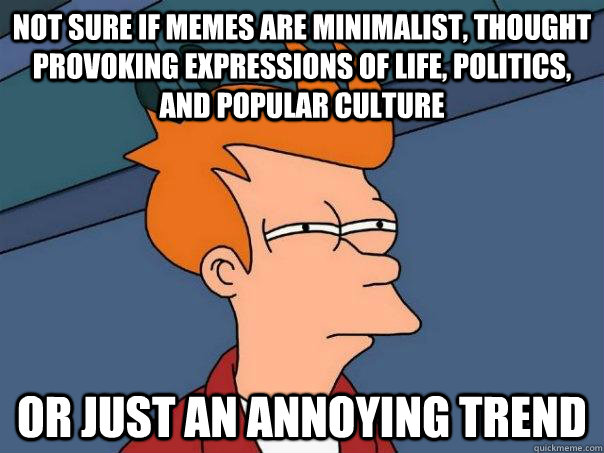 But is that feedback helpful to me? Not really. I’m not going to revise everything so that it reads in the style of Fight Club. That’s just not “me”. No author ever has or ever will write something that will be universally liked… Or hated, for that matter! People are just too different. If you try to write a book to please everyone, I’m pretty sure that you will end up pleasing nobody, especially yourself.
I write in a style I like, to create stories I would dearly love to read. That’s a good thing too, because I end up reading them over and over as I revise and even after I’m “done”! The first and most important person that I write for is myself, plain and simple… Because if I don’t enjoy creating and reading it, how the hell am I supposed to expect others to do the same?
Certainly, there is a lot of learning, practice, craft and refinement that goes into writing. That includes adapting to feedback. If I threw up my arms and said “Haters gonna’ hate!” to every bit of bad feedback I got, it would be very hard for me to grow as a writer. If I were a writer who only wrote for themselves, with their words never being seen by another soul, I suppose that I could have a “take it or leave it” attitude. But as I, personally, want to share my stories and entertain others, I need to understand what does and doesn’t work. I need to integrate that knowledge into the writing style I use and enjoy.
The “enjoy” part is really important. What I do is a labor of love. If it wasn’t, I would most certainly be quantifiably insane for putting in all the hard work and sacrifices that I do for writing.
I am beginning to learn about my voice and style. I’m a descriptive writer. This isn’t a bad thing, in my opinion. It’s the backbone of how some of the great masters of imaginative fiction wrote. But it also seems trendy these days for writers to be terse with their prose. Short. Shorter! WRITE IT AS A HAIKU!!! Maybe I’m old fashioned, but I like painting with words. A friend of mine said yesterday that it’s like putting ingredients into a recipe; good food is very rarely bland. It has character and variety that brings it to life. Descriptive language is the same. The minimalist approach is like cooking simple and bland to me; yes it works and meets your needs. But who wants to eat only plain rice every day, for every meal?
I think my friend’s analogy is a good one. It also holds true if taken to extremes: If you throw in too many flavors, they will cancel each other out or become unpalatable. Even if you keep the number of flavors down, you can’t have too much of one or combinations that don’t work together. The same is true of descriptive prose that is too ornate, clunky or thick.
My challenge as a descriptive writer is to make sure that I don’t let descriptors hurt my narration. I’ve certainly fumbled on that in some of my recent work. My revision and review process focuses on that all the time. I’ve probably got a ways to go, but I feel that I’m getting better in my judgement.
I don’t think that being a successful writer is defined by finding a preset, magical formula to emulate in your writing. While there are certainly fundamentals that all good writing has in common, I think it is import to look at issues of style and wording as components of one’s voice as an individual and as an artist. They are not “flaws”. You need to work with them, not fight them to overlay another person’s style over your own.
If you are writing because you love it and are working to create the stories that you would like to read, then you already have at least one sample member of your target audience at hand. Interview them. Find out their interests and inspirations, and treat them well. With that knowledge in hand, you’ll be equipped to seek others of the same ilk who want to read the same stories you do.

 Aethereal Engineer
Leave a comment